Introduction
Artificial Intelligence (AI) is no longer just a futuristic concept—it is actively reshaping the way businesses approach digital marketing. From analyzing customer data to delivering personalized experiences, AI is becoming a powerful driver of marketing efficiency, accuracy, and growth. In today’s competitive environment, marketers who embrace AI can unlock deeper insights, optimize campaigns, and achieve higher returns on investment (ROI).
This article explores the role of AI in digital marketing, covering current trends, the most effective tools, and the key benefits it offers.
The Growing Role of AI in Digital Marketing

Digital marketing has always relied on data. However, the scale and complexity of customer data available today make it difficult for marketers to process manually. AI bridges this gap by analyzing vast amounts of information in real-time, identifying patterns, and generating actionable insights.
Whether it is predicting customer behavior, automating repetitive tasks, or enhancing creative processes, AI is transforming every aspect of marketing. The shift is clear: businesses are moving away from intuition-based campaigns toward data-driven, AI-powered strategies.
sectetur adipiscing elit. Ut elit tellus, luctus nec ullamcorper mattis, pulvinar dapibus leo.
Key Trends in AI-Powered Marketing

Hyper-Personalization
AI enables marketers to deliver personalized recommendations and content tailored to individual customer preferences. This goes beyond simple segmentation, using predictive analytics to anticipate what customers need before they even search for it.AI-Driven Content Creation
From generating blog outlines to crafting ad copy, AI tools are accelerating the content creation process. Marketers can now produce high-quality material faster while still maintaining relevance and creativity.Conversational Marketing and Chatbots
AI-powered chatbots provide instant responses, improving customer experience and support. They handle FAQs, recommend products, and even guide customers through the buying journey.Voice and Visual Search Optimization
With the rise of smart speakers and visual search tools, AI is helping marketers optimize content for voice queries and image-based searches. This trend is shaping how brands approach SEO.Predictive Analytics
AI can forecast consumer behavior by analyzing past data, allowing marketers to anticipate customer needs and plan campaigns that drive higher engagement and conversions.Programmatic Advertising
AI-driven advertising platforms automatically purchase digital ad space, ensuring that ads are shown to the right audience at the right time, reducing wasted spend.
Essential AI Tools for Digital Marketing
There is a wide range of AI-driven tools that marketers are adopting to streamline campaigns and achieve better results. Some categories include:
Content Creation Tools: Jasper, Copy.ai, and Writesonic assist in generating blog posts, ad copy, and product descriptions.
SEO and Analytics Tools: Surfer SEO, Clearscope, and SEMrush use AI to provide keyword insights and content optimization strategies.
Social Media Tools: Lately.ai and Buffer analyze engagement data to schedule and optimize posts.
Customer Experience Tools: Drift and Intercom deploy AI chatbots for customer support and lead nurturing.
Email Marketing Tools: Mailchimp and HubSpot use AI for automated personalization, subject line optimization, and send-time predictions.
Advertising Platforms: Google Ads and Meta Ads leverage AI to optimize targeting, bidding, and placement in real-time.
By integrating these tools into their strategies, businesses can save time, cut costs, and reach customers more effectively.
Benefits of AI in Digital Marketing
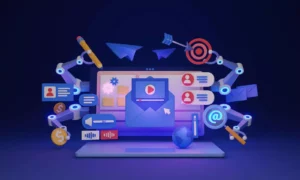
Improved Customer Insights
AI processes massive datasets to reveal customer behavior patterns and preferences that would be impossible to identify manually.Higher ROI
Through better targeting, personalization, and campaign optimization, AI helps businesses reduce wasted ad spend and increase conversion rates.Time and Cost Efficiency
Automation allows marketers to focus on strategy and creativity while AI handles repetitive tasks like reporting, data analysis, and content generation.Enhanced Customer Experience
With chatbots, personalized recommendations, and predictive messaging, customers enjoy a seamless and relevant brand experience.Better Decision-Making
AI equips marketers with real-time insights and forecasts, making it easier to allocate budgets, choose channels, and design campaigns with confidence.
Challenges of AI in Marketing

While the benefits are significant, businesses should also consider the challenges of adopting AI:
Data Privacy Concerns: Collecting and analyzing customer data requires strict adherence to privacy regulations.
High Implementation Costs: Advanced AI solutions can be expensive, making them difficult for smaller businesses to adopt immediately.
Human-AI Balance: Over-reliance on AI may reduce creativity and brand authenticity if not managed carefully.
Addressing these challenges requires a strategic approach where AI supports, rather than replaces, human marketers.
Conclusion
AI is no longer optional for businesses aiming to stay competitive in the digital age. From hyper-personalization and predictive analytics to automated content creation and chatbots, AI is transforming how marketers connect with customers. By leveraging AI-powered tools and embracing new trends, businesses can create smarter campaigns, enhance customer experiences, and achieve sustainable growth.
The role of AI in digital marketing will only expand in the coming years, making it essential for marketers to stay informed and adaptable. The organizations that succeed will be those that use AI not just as a tool, but as a core driver of innovation and customer engagement.
Click Here to Read More Articles